
13.6s
Mobile LCP · old site
Thirteen-plus seconds before the main content appeared on a phone.
Gretna Irrigation — owner-operated by Jeremy Zink — handles spring start-ups, sprinkler repairs, winterization blowouts, and new installs across Gretna and the Omaha metro. Homeowners searched, found the site… and waited. On a phone it took over thirteen seconds to show the hero. We rebuilt it from the ground up.
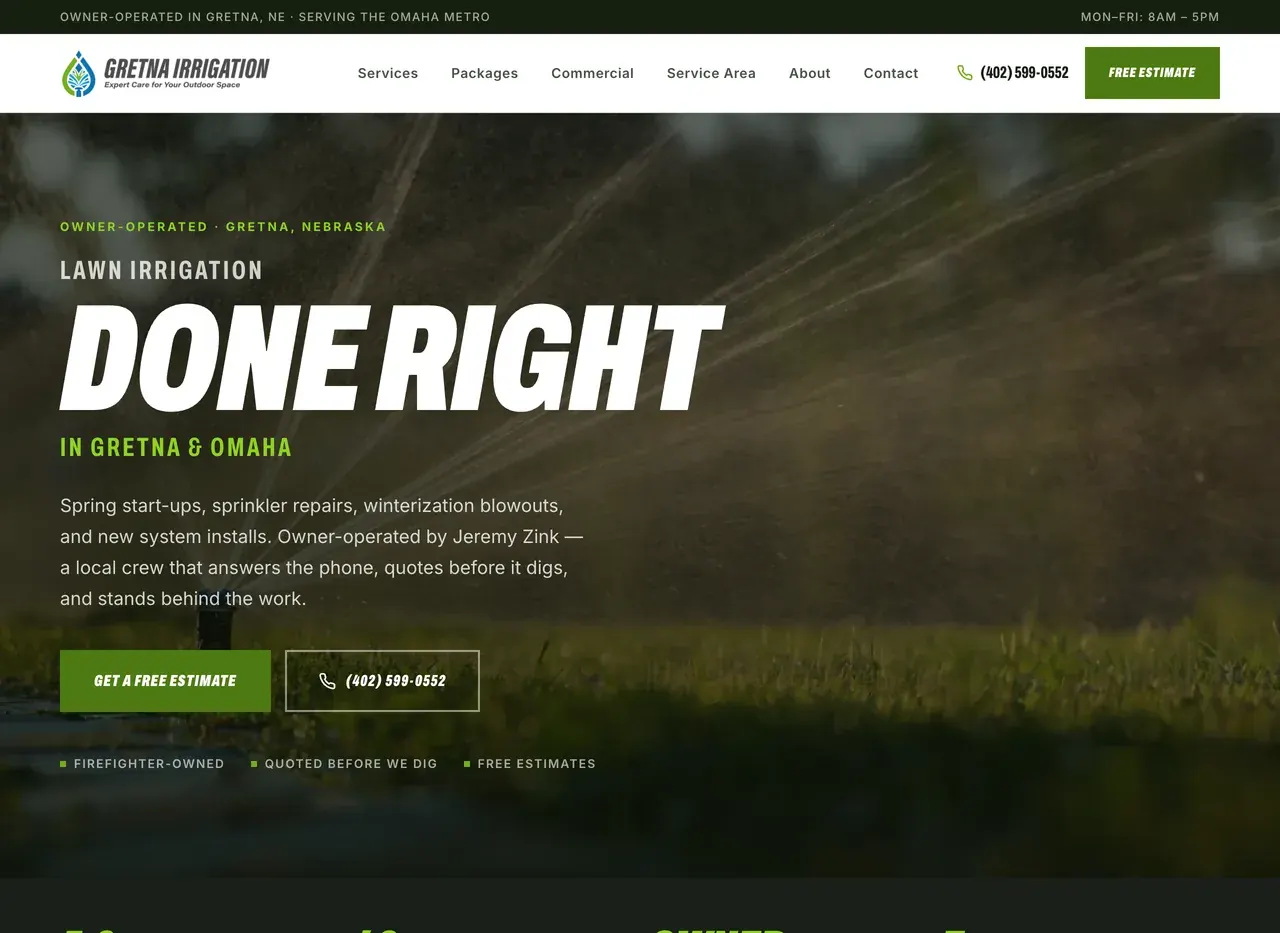
The old build looked fine on a fast desktop. On the phone most customers actually use, on a normal mobile connection, it fell apart — and a homeowner deciding who to call doesn’t wait thirteen seconds.
Rebuild it by hand, ship it to the edge, and make the fast version the one every customer sees.
We rebuilt the site by hand and shipped it to a global edge network. No template, no plugin pile, no two megabytes of junk loading before the hero. Just clean, fast code that shows up instantly whether the visitor’s in Gretna or across the metro.
“Lawn Irrigation Done Right” — a confident, owner-operated message that makes the value obvious in the first second, with one clear Get a Free Estimate path instead of a wall of navigation.
Structured around what homeowners actually type — irrigation in Gretna, Omaha, and the surrounding towns — with clean, crawlable markup, local signals, and a service-area page that gives Google something to rank.
A git-push deploy pipeline, zero monthly page-builder tax, and a build that passes Google’s new Agentic Browsing check 2/2 — so AI search and assistants can actually read and recommend the business.
Desktop Google Lighthouse · mobile: 98 performance, 100 everything else · Agentic Browsing 2/2 (AI-agent ready)
“Amazing customer service!! Fast, professional and a great product! Would highly recommend!!”
If your website makes customers wait, you’re handing calls to whoever loads first. We rebuild slow sites into fast ones — hand-coded, edge-hosted, and built to rank. See what it fixes with The Sub-Second Rebuild.